From 'Shijing' to Zen: What Exactly is Hidden in a Truly Rooted Chinese Name?
19 mars 2026
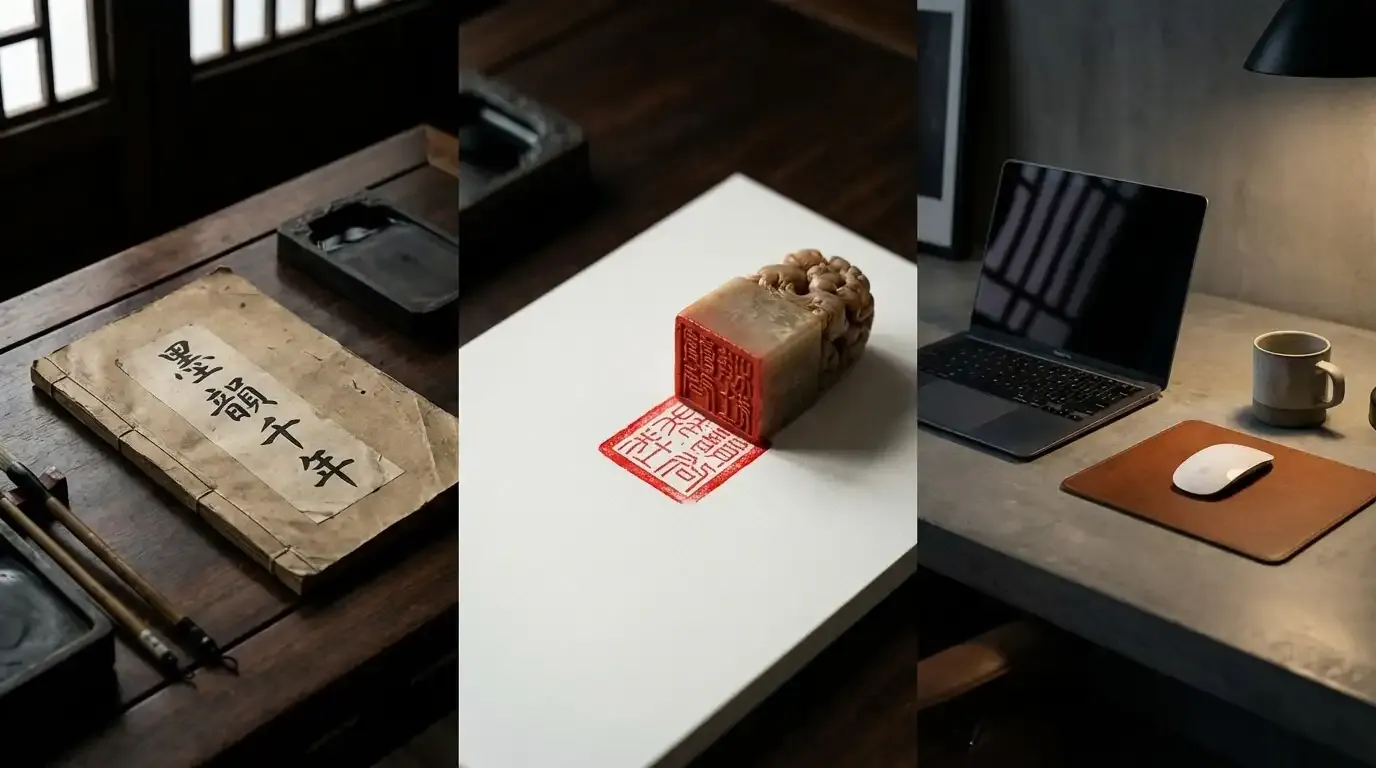
Let’s be honest: getting a Chinese name today is too easy.
Open any translation app, type in your English name, and—boom—it spits out two characters that sound vaguely like you. It takes three seconds. It’s efficient, it’s cheap, and it’s as soulless as a fast-food order.
But here’s the problem: if you’re someone who demands aesthetic excellence and respects cultural depth—whether you’re an artist, a C-suite executive, or a parent wanting the best for your child—are you really okay with pinning a factory-line label onto your identity?
Think of it this way. It’s like diluting industrial-grade alcohol with tap water and calling it "Single Malt Scotch." Does it get the job done? Technically, yes. But does it have the character? Not even close.
A truly great name isn’t about matching phonetics; it’s about 雅 (Yǎ)—a curated sense of refinement. For the globally-minded and the aesthetically demanding, a Chinese name is never just a label. It is your first business card to the world. It’s the introduction of your cultural literacy before you even speak. It’s the bridge between you and three thousand years of wisdom.
At Find Chinese Name, we don't do "translations." We help you cross that bridge.
I. The Shijing: 3,000-Year-Old Verses, Today’s Names
How old is the Shijing (The Classic of Poetry)? We’re talking 11th to 7th century BCE. Over three millennia. Yet, the most sophisticated Chinese names still come from its pages.
Why? Because the characters in the Shijing carry an inherent, unspoken elegance. It doesn’t tell you to "be a good person"; it gives you a river, a mountain, or a tree, and lets you feel the virtue within.
Take "溯游" (Sùyóu) from our vault.
It comes from the famous line: "Following her up the stream (溯游从之), she seems to be in the middle of the water." On the surface, it means swimming against the current. But look closer: it’s about a person who, in a rushing river, chooses to head upstream. Isn't that the perfect metaphor for a founder who thinks independently and dares to challenge the status quo?
For a leader who breaks the rules, this name is a statement: I don't follow the crowd.
Or take "令仪" (Lìngyí).
"Lìng" is beauty; "Yí" is demeanor. It’s a term used to describe the quiet grace of the aristocracy. It means you don’t have to raise your voice for people to know you’ve been well-bred. For a professional who lives by their reputation, this name is a silent endorsement: I value standards. I am trustworthy.

II. The Chu Ci: Names More Romantic than Romance Itself
If the Shijing is the song of the earth, the Chu Ci (Songs of Chu) is the poetry of the stars. It’s not about the mundane; it’s about the universe, deities, and the pursuit of the sublime.
Take "望舒" (Wàngshū).
Do you know who Wàngshū is? She is the divine charioteer of the moon in ancient mythology. In Chinese culture, the moon isn't just a cold rock in space—it’s a symbol of clarity, high-mindedness, and eternal reflection.
If you are a creator or a seeker of spiritual freedom, carrying this name is a daily reminder to look up. The name itself is a metaphor, a symbol, a piece of wearable art.
Even the most poetic characters can be adapted for English speakers. Here is our guide on [how to pronounce your authentic Chinese name].
III. The Divide Between "Refined" and "Common": It’s in the Roots
This is the core philosophy of Find Chinese Name.
Most people think a name's quality depends on how it sounds. It doesn't. What determines if a name is 雅 (Refined) or 俗 (Tacky) is its etymological "DNA"—where it came from, the poetry it’s carried, and the generations it’s weathered.
Let’s look at a few contrasts, and you’ll see the difference immediately.
1. On Ambition
The Tacky Choice: 发 (Fā). It means "to get rich." It’s blunt. It’s a raw shout for money. But what lies beyond the wealth? Nothing.
The Refined Choice: 远致 (Yuǎnzhì). Derived from "Stillness leads to the far-reaching (宁静致远)." It says: I pursue success, but I care more about the long game. Am I calm enough? Do I see far enough? For someone building a 30-year legacy rather than a next-quarter report, 远致 is the anchor.
2. On Strength
The Tacky Choice: 强 (Qiáng). It means "strong." That’s it.
The Refined Choice: 凌巍 (Língwēi). "Líng" is soaring ambition; "Wēi" is the majesty of a mountain. This isn't brute force; it’s dignified power. It’s the name for someone who has weathered the storms and is still standing.
3. On Beauty
The Tacky Choice: 美 (Měi). It just means "beautiful." Empty.
The Refined Choice: 清懿 (Qīngyì). "Qīng" is clarity; "懿" is virtuous beauty. This isn't beauty applied like makeup; it’s beauty that radiates from the bone. For those who value inner cultivation, 清懿 hits a deeper chord.
IV. Zen: Finding Stillness in a Loud World
Who isn't exhausted today? Phones buzzing, minds racing. In this chaos, names that carry a bit of "emptiness" or "clarity" have become the ultimate luxury.
Take "初霁" (Chūjì). It means "the first clearing after rain." The moment the storm stops and the air is so clean you could drink it. This name hides a supreme skill: the ability to stay calm at the center of a storm and be the first to see the path when the clouds part.
Or "知微" (Zhīwēi). From the idiom "Seeing the monumental in the infinitesimal (知微见著)." It’s the ability to notice the shift others miss. It’s for the person in tech, finance, or strategy who knows that the biggest opportunities are hidden in the smallest details. It says: I’m paying attention. I see what you don’t.

V. You Have the Name. How Do You Pass It Down?
A truly great name shouldn't just sit on an ID card.
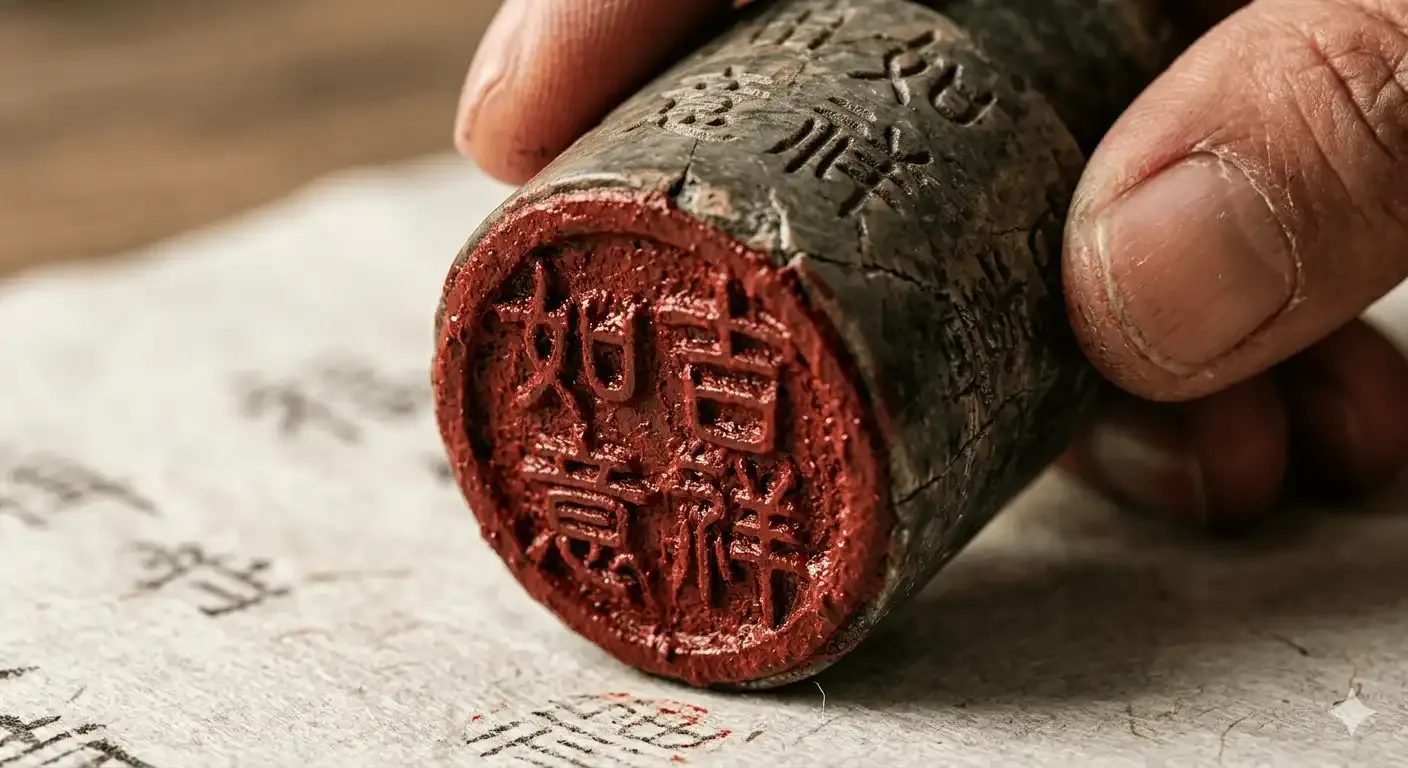
In the ancient world, a name was "activated" by a seal. You carve the characters into stone, press them into cinnabar paste, and stamp them onto paper. That moment is a lifelong commitment.
That’s why we integrated a Seal Generation feature into Find Chinese Name. Whether you choose "翰章" (Hànzhāng - brilliant legacy) or "圣谟" (Shèngmó - strategy of sages), you can generate your own traditional red imprint with one click.
This red mark is more than a signature. It belongs on your letters, your artwork, and every piece of your legacy you intend to leave behind.
[Sign in to see what your exclusive seal looks like]—turn a 2,000-year-old poem into a physical artifact you can hold.
A Few Words from the Heart
Choosing a Chinese name is your first real handshake with another culture.
You can choose the three-second, cold, robotic code—it’s not "wrong," but it doesn’t know you.
Or, you can choose a name with roots, a soul, and a history. A name that knows you, understands you, and can walk beside you for the rest of your life.
The difference is where you find it.
Is it from a generator? Or is it from the Shijing, the Chu Ci, and characters that have lived for thousands of years?
Whether you’re crafting a blessing for a 2026 Fire Horse baby or branding your entry into the Chinese market—don’t settle. Find the poetic name that matches your life’s narrative.
Our [Names Directory] is right here. Step inside and see which character hits home for you.