Hollywood's Chinese Identity: A Masterclass in Genius vs. Funny Names (2026 Edition)
26 mars 2026
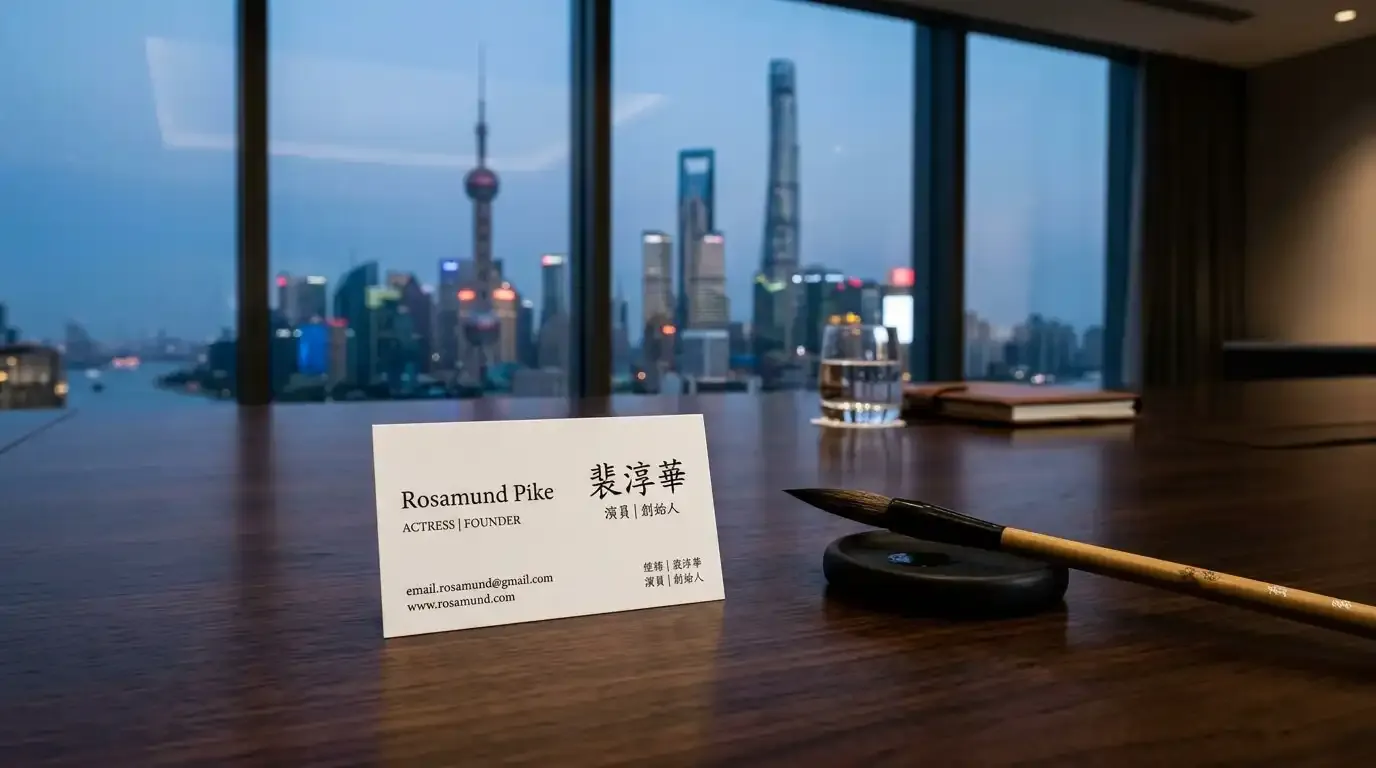
Let’s be real for a second. We live in 2026. A machine will happily translate "David" into Da Wei (大卫). But deep down, you know that "Da Wei" (literally meaning "Big Guard") has zero ambition, no cultural depth, and about as much professional gravitas as a cartoon character. It's the ultimate phonetic cop-out.
This isn’t just an issue for expats or business executives. This same battle—authenticity vs. lazy sound-alike logic—is played out on the grandest stage of all: Hollywood in China.
When Western celebrities interact with the Chinese market, they are given a name. Sometimes they choose it themselves. More often, the internet chooses it for them. The resulting names fall into two distinct categories: Cultural Genius and Phonetic Hilarity. For anyone trying to navigate their own identity in China, this is not just entertainment—it is a mandatory masterclass in branding.
The "Transliteration Trap": When Sound-Alikes Fail
A machine sees a Western name as a mathematical equation: English sound must equal Chinese sound. This is where most celebrity translations go to die.
Take a classic name like Mark Johnson. If you simply transliterate it, you get Ma-ke Qiang-sen (马克·约翰逊). What’s the problem?
It's five characters long. No native Chinese person has a five-character name. It looks instantly clunky.
It’s meaningless. Qiang-sen doesn't mean anything to a local; it’s just a noise. It’s hard to remember, annoying to type, and carries exactly zero emotional resonance. It’s not a name; it’s a phonetic artifact.
For decades, this was the accepted standard. But in 2026, the Chinese audience—highly educated, deeply proud, and culturally savvy—demands more. They want characters that tell a story. They want names that resonate.
1. The Geniuses: The A-Listers Who Nailed It
This is the gold standard. When a celebrity takes the time to consult a cultural expert (or a poet), they get an adopted Chinese name that feels like it has always belonged to them. These are not translations; they are identities.
The Case of Rosamund Pike (Pei Chunhua)
This is the industry benchmark. Period. Rosamund Pike, famous for Gone Girl, did something rare. She didn’t just translate "Rose." She adopted a name given to her by human naming experts, specifically to reflect her personality and connection to China.
Her Adopted Name: Pei Chunhua (裴淳华).
The Breakdown:
Pei (裴): A legitimate, historically rich Chinese surname. It echoes the sound of "Pike" just enough to create a link.
Chun (淳): Meaning pure, honest, or sincere.
Hua (华): Meaning elegance, magnificence, or brilliantly decorated. It also shares a character with "China."
The Verdict: Genius. "Pei Chunhua" reads like the name of a highly educated, trustworthy scholar or artist. It captures Pike's elegance and intelligence. When she introduced herself with this name, native speakers were genuinely impressed. She gained instant Guanxi (connection and respect) because she showed deference to the language. She didn’t just say "I’m Rosamund"; she said, "I have arrived as Pei Chunhua."
This name commands respect. It has literary grace. It’s memorable. It is, quite simply, a perfect asset for her personal brand in China.
.webp)
2. The Fans' Choice: The Wild and the Hilarious
This is what happens when you don't take control of your narrative. The Chinese internet is vast, creative, and has zero chill. When native speakers (particularly Gen Z and Alpha) embrace a Western star, they give them a nickname (nickname, not an adopted name).
These names are incredibly funny, but they are also shockingly accurate in how they summarize a celebrity's public persona. Crucially, these are NOT professional names and should never be used on a business card. They are term of affection (or mockery) used by fans.
Katy Perry: "Fruit Sister" (Shuiguo Jie)
This is a classic. Katy Perry is famously colorful, and her stage costumes often involve literal giant fruits. The fans simply called it like they saw it.
Verdict: Hilarity. In China, she is universally known as Shuiguo Jie (水果姐). It's affectionate, memorable, and captures her public image perfectly. But you would never want to be known professionally as "Fruit Sister" in a serious business meeting. It lacks all gravitas.
Timothée Chalamet: "Sweet Tea" (Tian Cha)
This is a clever one, blending sound and looks.
The Breakdown: The first syllable of Chalamet (Cha) sounds like the Chinese word for Tea. Combine that with his "sweet" looks, and you get Tian Cha (甜茶).
Verdict: Genius/Hilarity Hybrid. It’s incredibly charming, but it firmly categorizes him as a cute, youthful heartthrob (a type, rather than a versatile actor).
Lorde: "Wine Sister" (Niu Jiu Jie)
Lorde’s single "Royals" sounded somewhat phonetically similar to the Mandarin words for "New" (Niu) and "Wine" (Jiu).
Verdict: Clunky Hilarity. It’s a very weird nickname (Niu Jiu Jie - 扭酒姐), but it’s sticky. It just goes to show how the fans will prioritize sound and meme-potential over literary elegance.
Jennifer Lawrence: "Big Cousin" (Da Biao Jie)
This one came from a specific internet moment. She has a reputation for being approachable and relatable, combined with a moment where a fan mistook her for a relative.
Verdict: Endearing. Calling her Da Biao Jie (大表姐) instantly makes her feel like a trustworthy, approachable member of the family. It is a fantastic PR asset, but it’s a social name, not a formal identity.
.webp)
The Takeaway for Everyone Else (Even If You’re Not a Star)
You aren’t a celebrity. But in 2026, you are a brand. Your name is your very first handshake. Your LinkedIn profile, your business card, and your digital footprint are your red carpet.
If you are an expat, an entrepreneur, or a corporate executive, your name is your primary professional asset. Don't leave it to a direct sound-alike translator. Don’t gamble your personal brand with a name like "Big Guard" or, even worse, "Fruit Sister."
The Genius names (like Pei Chunhua) work because they achieve three things:
Cultural Deference: They respect the rules of legitimate Chinese surnames and poetic meanings.
Artistic Flow: They are optimized for the four tones of Mandarin, ensuring they sound beautiful when spoken aloud.
Personal Alignment: The characters are chosen specifically to reflect the energy, industry, or ambition of the individual. A finance executive gets characters implying stability; a tech founder gets characters implying speed and innovation.
Don't let the internet choose your name. Claim your professional identity in China.
Before you finalize your business identity, explore ourA-Z Chinese Name Directoryto browse curated, expert-verified names that carry real weight. Or, if you want a name that is completely stress-tested for your industry, career goals, and personal vibe, let our native experts craft your perfect professional identity through ourPremium Naming Service. Don't settle for being a noise; become Pei Chunhua.